Pub.lished Movie Reviews
Easy Rider (1969)
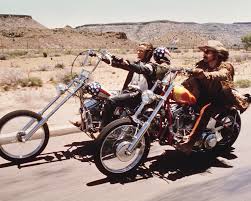
If you have ever wanted to ride a motorbike across America in the 60s, now is your chance to do so vicariously."Easy Rider" is a remarkable film that challenges the narrative norms. The original rough-cut was reportedly over three hours long, but director Dennis Hopper, in an audacious move, edited it down to a reasonable length by discarding the linear storyline, leaving the protagonists suspended in an invisible narrative, akin to falcons floating on an unseen current of air. This radical approach strips a typical motorcycle movie of its weakest point - the story - and accentuates its strongest - the role of the self-proclaimed rebel in a conformist society. The film transcends the narrow confines of bike culture, resonating with anyone who has dared to challenge the establishment.
As a defining movie of the New Hollywood generation, both in content and form, "Easy Rider" is a cinematic milestone worth discussing. The film manages to epitomize the spirit of an era without becoming overly nostalgic or idealized. Yes, it portrays the freedom and rebellion of the time, with Wyatt and Billy cruising on their choppers, smoking weed, and indulging in free love. However, it also depicts the dark side of the counterculture, presenting a commune on the verge of collapse, violent clashes with mainstream society, and the hollow, drug-addled mess that the movement had become.
The film's style is as audacious as its narrative approach. Hopper's directorial debut showcases a bold editing style influenced by European cinema, particularly the French New Wave, employing techniques such as jump cuts, flash-forwards, and handheld location camerawork. Despite the rough, unvarnished look of the film, it perfectly suits the subject matter. Particularly noticeable is the surreal acid trip scene, a wild, psychedelic sequence that is a rarity in mainstream cinema at the time.
"Easy Rider" also dared to challenge the movie making establishment, and heralded a shift in Hollywood. Alongside films like "Bonnie and Clyde" and "The Graduate," it ushered in the New Hollywood era, signaling that low-budget films made by avant-garde directors could be both critically and commercially successful. This film, heavily influenced by the French New Wave, represented a counterculture generation disillusioned with its government and the establishment. The film also marked the rise of Jack Nicholson as a movie star, despite appearing only in a supporting role in the latter part of the film.
"Easy Rider" is more than a movie; it's a symbol of rebellion, an icon of counterculture, and a testament to the power of cinema to challenge and disrupt the establishment. It's a film that, like its heroes, rides on an invisible story, making its presence felt even when unseen. It's a film that, despite its flaws and failings, remains as compelling and relevant today as it was in 1969.
- You're uncomfortable with depictions of drug usage and counterculture.
- You prefer films with a tightly structured plot.
- You take offense in political subtexts or themes of social alienation.
- Graphic violence or emotional scenes disturb you.
- You are under the age of 17. The movie has an R-rating for strong language, sex, violence and drug use.
Warning: The following may contain spoilers:
What's the deal with "Easy Rider"? I mean, here we have these two guys, riding across America on their choppers, selling drugs. And what do they do with all the money? They stuff it in a plastic tube! I mean, who needs a bank when you have a good ol' plastic tube, am I right?
And let's talk about the helmets. They're riding choppers, facing all kinds of dangers on the road but their helmets? More like fashion statements than safety gears! One's an American flag, the other's got some Native American design. It's like a fashion show on wheels! Safety? Not so much.
And Jack Nicholson, he's supposedly a lawyer. But he drinks, smokes, and doesn't have a job! I thought lawyers were supposed to be busy, not tagging along on spontaneous road trips!
And the ending! They've done all this, crossed the entire country, and for what? To get shot by some random guys in a truck. It's like they took a wrong turn at Albuquerque and ended up in a Twilight Zone episode. What is the deal with that?
American Beauty (1999)
Both "Easy Rider" (1969) and "American Beauty" (1999) are quintessential explorations of American life and culture, dealing with themes of freedom, disillusionment, and the search for personal fulfillment. They present critical views of the American Dream, offering a profound and often unsettling look at societal norms and expectations. Each film uses compelling narratives and complex characters to challenge conventional lifestyles and values, thus, fans of the unfiltered social critique in "Easy Rider" will appreciate the similar thematic exploration in "American Beauty".
A Clockwork Orange (1971)If you're a fan of "Easy Rider," "A Clockwork Orange" could be a good pick for you. Both films share similarities in their exploration of countercultural movements and societal norms. Directed by Stanley Kubrick, this is a masterpiece that managed to combine dark humor, dystopian future, and acute social critique, creating a truly unique and thought-provoking experience.
Fear and Loathing in Las Vegas (1998)If the psychedelic nature of "Easy Rider" was something you enjoyed, "Fear and Loathing in Las Vegas" might be up your alley. Directed by Terry Gilliam, the film is a surreal and wildly visual journey down the rabbit hole of psychedelia, filled with colorful characters and bizarre scenarios. It's a fun and wild ride similar to "Easy Rider".
2001: A Space Odyssey (1968)"Easy Rider" and "2001: A Space Odyssey" are iconic films of the late 1960s that challenged mainstream Hollywood narratives, offering viewers an unconventional cinematic experience. They are defined by their groundbreaking visuals, thought-provoking themes, and atmospheric storytelling that relies heavily on music and imagery rather than dialogue. "Easy Rider" epitomizes counterculture, while "2001: A Space Odyssey" explores mankind's place in the universe, but both films offer a critique of societal norms and provoke introspection, making them compelling for audiences seeking depth and intellectual stimulation in cinema.
One Flew Over the Cuckoo's Nest (1975)Those who appreciate "Easy Rider" (1969) are likely to enjoy "One Flew Over the Cuckoo's Nest" (1975) as both films are seminal works of the New Hollywood era that explore themes of nonconformity, rebellion, and freedom. They both feature complex, layered performances from actors at the peak of their craft (Peter Fonda and Dennis Hopper in "Easy Rider," Jack Nicholson in "Cuckoo's Nest"), and ground-breaking direction from maverick filmmakers (Dennis Hopper for "Easy Rider," Milos Forman for "Cuckoo's Nest"). The countercultural undercurrents, poignant social commentary, and the tragic consequences of challenging the system present in both films make them compelling and relatable for lovers of thoughtful, provocative cinema.
Citizen Kane (1941)Though very different in style and narrative, "Easy Rider" and "Citizen Kane" are both groundbreaking in their respective eras, redefining film conventions and commenting on American society. "Easy Rider" is a countercultural classic that reflects the spirit of rebellion and freedom in the 1960s, while "Citizen Kane" is a pioneering work in cinematic techniques, narrative structure, and thematic depth. Both films offer rich character studies and challenge the status quo, making them compelling watches for any cinephile who appreciates innovation, social commentary, and deep, complex narratives in film.
The Graduate (1967)Both "Easy Rider" (1969) and "The Graduate" (1967) are iconic films that encapsulate the counterculture spirit of the late '60s, exploring themes of disillusionment, rebellion, and the search for identity in a rapidly changing society. These films, with their groundbreaking narratives, memorable dialogues, and exceptional performances, particularly from Dustin Hoffman in "The Graduate" and Peter Fonda in "Easy Rider," offer a distinctive commentary on the American Dream, societal expectations, and the quest for personal freedom. If you appreciate the nuanced storytelling, the atmospheric cinematography, and the evocative soundtracks that these films share, you'll likely enjoy both.
Midnight Cowboy (1969)"Easy Rider" and "Midnight Cowboy" are iconic films from 1969 that tackle themes of freedom, identity, and unconventional lifestyles in an era of societal change. They encapsulate the counterculture movement of the 1960s, featuring characters that are social outsiders embarking on transformative journeys. Their narratives are infused with a sense of realism, rebelliousness and a search for self-discovery, complemented by groundbreaking performances and memorable soundtracks. Therefore, if you appreciate the rawness, grit, and exploration of American counterculture in "Easy Rider," you will likely find the same depth and complexity in "Midnight Cowboy."
Taxi Driver (1976)Both "Easy Rider" and "Taxi Driver" are seminal films of New Hollywood, characterized by their gritty realism, exploration of countercultural themes, and anti-establishment sentiments. They both present anti-heroes as protagonists and delve into the darker aspects of American society. "Easy Rider" provides a road-trip exploration of the American landscape and psyche, while "Taxi Driver" offers a hauntingly intense look at urban isolation and moral ambiguity. Buffs of "Easy Rider" would appreciate "Taxi Driver" for its similar stylistic choices, raw performances, and its profound commentary on the American experience.
Raising Arizona (1987)Admirers of "Easy Rider" are bound to love "Raising Arizona" as the latter shares the same spirit of rebellion against societal norms and conventions, though in a more comedic tone. Both films focus on eccentric characters living on the fringes of society, embarking on outrageous adventures across the American Southwest. They both provide an unorthodox, yet fascinating, exploration of American culture and values. Furthermore, just as "Easy Rider" was groundbreaking in its experimental filmmaking styles, "Raising Arizona" is recognized for its unique, fast-paced editing and cinematography.
Trainspotting (1996)Aficionados of "Easy Rider" (1969) will also love "Trainspotting" (1996) because both movies delve into counter-culture themes, exploring the lives of characters who choose to live outside societal norms. They are both unflinching in their portrayals of drug use and its consequences, offering a raw and realistic view of the darker side of freedom and rebellion. In addition, both films are renowned for their iconic soundtracks and innovative cinematic styles, making them must-watch for those who appreciate groundbreaking filmmaking.
Alice Doesn't Live Here Anymore (1974):Similar to "Easy Rider," "Alice Doesn't Live Here Anymore" delves into adventure, self-discovery, and America's diverse landscapes. Notably, this compelling drama, directed by Martin Scorsese, is praised for its memorable dialogues, strong characters, and for presenting an empowered woman protagonist, something of a rarity in its time.
Badlands (1973):If you appreciate the road trip aspect of "Easy Rider," you could also like "Badlands". Terrence Malick's directorial debut is a powerful narrative centered around a young couple on a cross-country killing spree. This movie is renowned for its stunning cinematography and strong character development, qualities that resonate strongly with "Easy Rider".
The Last Picture Show (1971):"The Last Picture Show" might appeal to you if the character introspection and melancholic undertone of "Easy Rider" resonated with you. Directed by Peter Bogdanovich, this film is a coming-of-age drama set in a bleak, declining small town in Texas and deals with themes of alienation, dislocation, and the painful transition from innocence to self-awareness.
Like this? Then click here to see more drama movies