Pub.lished Movie Reviews
2001: A Space Odyssey (1968)
This is not a journey through space, but a journey for your mind.And all the silent footage gives you plenty of time to ruminate.
Stanley Kubrick's "2001: A Space Odyssey" is a silent, chilling film, much like the cold and silent space it portrays.
The movie features minimal dialogue, scant action, and lacks explicit explanations.
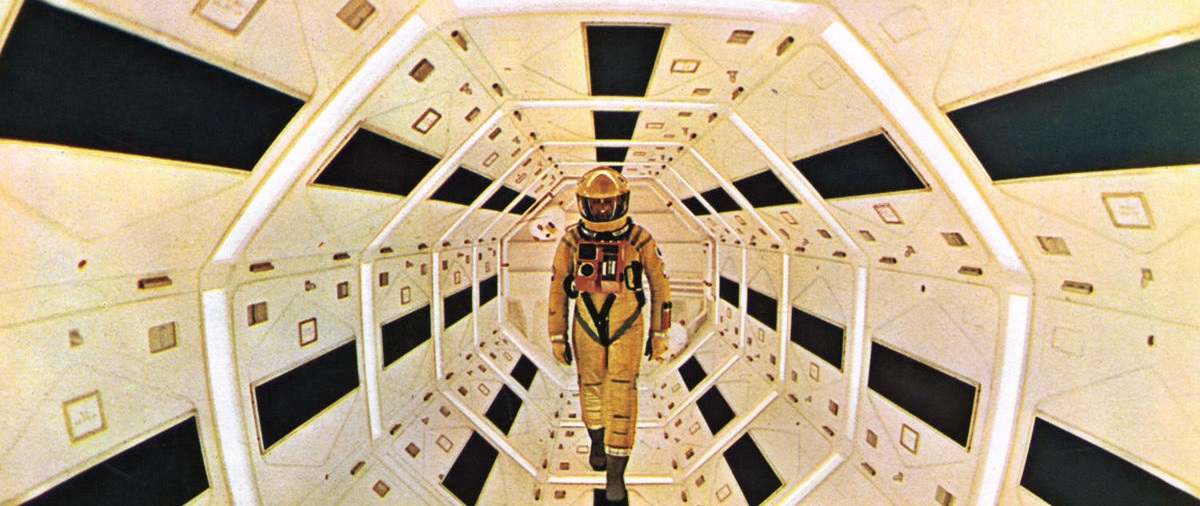
What the film lacks in dialogue, it compensates for in stunning visuals, crafted before the advent of CGI. Each visual element was physically constructed, far from mere cardboard models. The components of the spaceship move deliberately, with a slow, weighty grace.
The representations of space are truly awe-inspiring. The human characters in the film are largely reticent, making the computer seem more personal and engaging. At the time of the film's creation, the concept of a talking computer was revolutionary, as were the visual effects. Even today, the visual effects remain impressive, surpassing most CGI work.
The real stars of the film are the visuals of the spaceship, machines, and space. The human characters often seem like an afterthought, merely passengers on a journey.
"2001: A Space Odyssey" is a controversial film. It does not pander to the audience or offer straightforward explanations, instead inviting personal interpretation. Investing time in the film results in a fascinating journey of deciphering the meaning of the monoliths and the film's ending.
The renowned science fiction author, Arthur C Clarke, penned a book concurrently with the film's creation. The book, based on an earlier script of the movie, was released after the film. Normally, I would recommend reading the book before watching the movie, but this is an exception.
While the film may come across as slow-paced, featuring lengthy shots of a giant spaceship spinning on its axis, it will resonate in your mind. No explanation is given as to why the spaceship needs to spin to create artificial gravity, or why the astronauts have to exercise regularly. Despite this, if you watch it in its entirety, you'll find yourself contemplating its deeper meaning. Even though the subtle meaning is up for interpretation, the immediate message is clear: space travel is not as thrilling as often depicted in films. Space is cold, and space travel is largely uneventful, which is preferable, as any excitement in space usually signifies trouble.
- You prefer action-packed, fast-paced films.
- You have a short attention span.
- You dislike films that are highly interpretive and abstract.
- You are uncomfortable with scenes of intense psychological tension.
- You are not a fan of science fiction or Space-themed movies.
- You cannot handle long periods of silence or slow plot development.
- You are younger than the PG rating (Parental Guidance).
Warning: The following may contain spoilers:
What's the deal with "2001: A Space Odyssey"? I mean, they spend the whole movie trying to get to Jupiter. If they wanted to spend hours in a confined space, experiencing weird visuals, and not talking to each other, couldn't they just take the New York subway?
It's like Kubrick called up a meeting and said, 'How can we make the vast, endless expanse of space feel like a trip to the DMV?' And they nailed it! Two and a half hours of my life, floating away, like that pen in zero gravity.
Remember, this was the '70s. People were into stuff like disco and lava lamps. They had patience for dull. But this movie? It's like watching paint dry, but if the paint was also trying to philosophize about human existence.
Then there's HAL 9000, the computer with more personality than any other character in the film. HAL's over here plotting to kill everyone, and I'm rooting for him because, at least, he's doing something interesting!
The whole movie is like an elaborate, high-tech version of "Don't touch that, you don’t know where it's been!" But instead of a dirty dime on the street, it's a mysterious, black monolith on the moon.
And you know, they say in space no one can hear you scream. But apparently, they can hear you play classical music. Who knew? The aliens are probably thinking, "We were going to invade, but this Johann Strauss is just too catchy!"
American Beauty (1999)
"2001: A Space Odyssey" and "American Beauty" are cinematic masterpieces that explore profound themes about human existence. They challenge viewers with their complex narratives, visual symbolism and rich character development, requiring active engagement and interpretation. Kubrick's "2001: A Space Odyssey" explores the evolution of mankind and our place in the universe, while Mendes' "American Beauty" examines the struggle for personal fulfillment in suburban America. Both films encapsulate existential themes, prompting introspection and a deeper understanding of our own lives, making them a must-watch for lovers of thought-provoking cinema.
Interstellar (2014)If you cherished the epic scale and deeper philosophical themes in "2001: A Space Odyssey," then Christopher Nolan's "Interstellar" is definitely a choice you should consider. Just like Kubrick's masterpiece, "Interstellar" is a gripping exploration of space and humanity. It combines high concept theoretical physics with sublime storytelling, generating a similar awe-inspiring ambiance found in "2001: A Space Odyssey".
Blade Runner (1982)Though not entirely set in space, "Blade Runner" is another iconic science-fiction film just like "2001: A Space Odyssey". Directed by Ridley Scott, the movie explores the blurred line between humans and artificial intelligence. The ground-breaking visuals and deep, philosophical undertones are quite similar to those found in "2001: A Space Odyssey".
Gravity (2013)Directed by Alfonso Cuarón, "Gravity" provides visual splendor and tense, thrilling sequences of space disaster akin to those seen in "2001: A Space Odyssey". The movie is praised for its groundbreaking effects, story-telling and intense performances. A cinematic marvel, "Gravity" is an experience you'd be unlikely to forget.
Citizen Kane (1941)Connoisseurs of "2001: A Space Odyssey" will also love "Citizen Kane" as both films are renowned for their innovative filmmaking techniques and groundbreaking narratives. Just as Stanley Kubrick pushed the boundaries of science fiction and visual effects in "2001: A Space Odyssey," Orson Welles revolutionized the art of storytelling and cinematography in "Citizen Kane." Both films are also known for their thematic depth, exploring complex issues such as human nature, ambition, and the consequences of power. Hence, those who appreciate the artistic, narrative, and thematic richness of "2001: A Space Odyssey" will likely find similar qualities to admire in "Citizen Kane."
Psycho (1960)Both "2001: A Space Odyssey" and "Psycho" are seminal works by acclaimed directors Stanley Kubrick and Alfred Hitchcock respectively, who are known for their unique storytelling styles and innovative filmmaking techniques. Each film presents a captivating plot that delves into the human psyche and pushes the boundaries of its genre - science fiction and horror. They are both characterized by their dramatic use of music, meticulous cinematography, attention to detail, and their suspenseful and thought-provoking narratives. These shared elements provide a similarly immersive and thrilling experience for viewers, making it likely for those who appreciate the artistic craft and depth of "2001: A Space Odyssey" to also enjoy "Psycho".
The Manchurian Candidate (1962)"2001: A Space Odyssey" and "The Manchurian Candidate" are classic films that delve into deep themes of human existence, manipulation, and transformation. They brilliantly blend elements of suspense, psychological thriller and drama, with a focus on character development and the exploration of profound philosophical questions. The intricate plots, compelling characters, and masterful storytelling techniques used in both movies are sure to captivate audiences who appreciate sophisticated and thought-provoking cinema.
Monty Python and the Holy Grail (1975)"2001: A Space Odyssey" and "Monty Python and the Holy Grail" are iconic films that showcase revolutionary ideas in their respective genres. "2001: A Space Odyssey" is acclaimed for its visionary and avant-garde approach to science fiction, while "Monty Python and the Holy Grail" is celebrated for its absurd and satirical take on the Arthurian legend. Both films are rich in symbolism, philosophical undertones, and creative storytelling which require a level of intellectual engagement from the viewer, making them both appealing to those who appreciate thought-provoking and unconventional cinema.
This Is Spinal Tap (1984)"2001: A Space Odyssey" and "This Is Spinal Tap" are classics of their respective genres, offering a unique viewing experience that challenges traditional film norms. While "2001: A Space Odyssey" is a slow-paced, visually stunning exploration of humanity's relationship with technology and the universe, "This Is Spinal Tap" is a mockumentary that satirizes the extravagant world of rock 'n' roll. Both films employ a subtle, cerebral humor and require attentive viewing to fully appreciate their depth. Furthermore, they both subvert expectations, with "2001: A Space Odyssey" revolutionizing science-fiction cinema and "This Is Spinal Tap" popularizing the mockumentary style. This shared characteristic of pushing boundaries and challenging viewers distinguishes them as stand-out films in their genres, making them appealing to those with a taste for unconventional cinema.
Solaris (1972):Directed by Andrei Tarkovsky, "Solaris" shares a lot of the same existential themes with "2001: A Space Odyssey". The movie explores human emotions and consciousness against a sci-fi backdrop, a setting that is quite akin to Kubrick's 1968 film. Many critics see "Solaris" as the Soviet answer to "2001: A Space Odyssey", making it a must-watch if you admired Kubrick's classic.
Moon (2009):A major aspect of "2001: A Space Odyssey" that stood out was the film's focus on individuals in a vast, mysterious universe. "Moon", directed by Duncan Jones, carries a similar focus. It's a compelling and thought-provoking sci-fi thriller with enough suspense to keep you on the edge of your seat, all while unraveling a complex narrative.
Like this? Then click here to see more scifi movies