Pub.lished Movie Reviews
Once Were Warriors (1994)
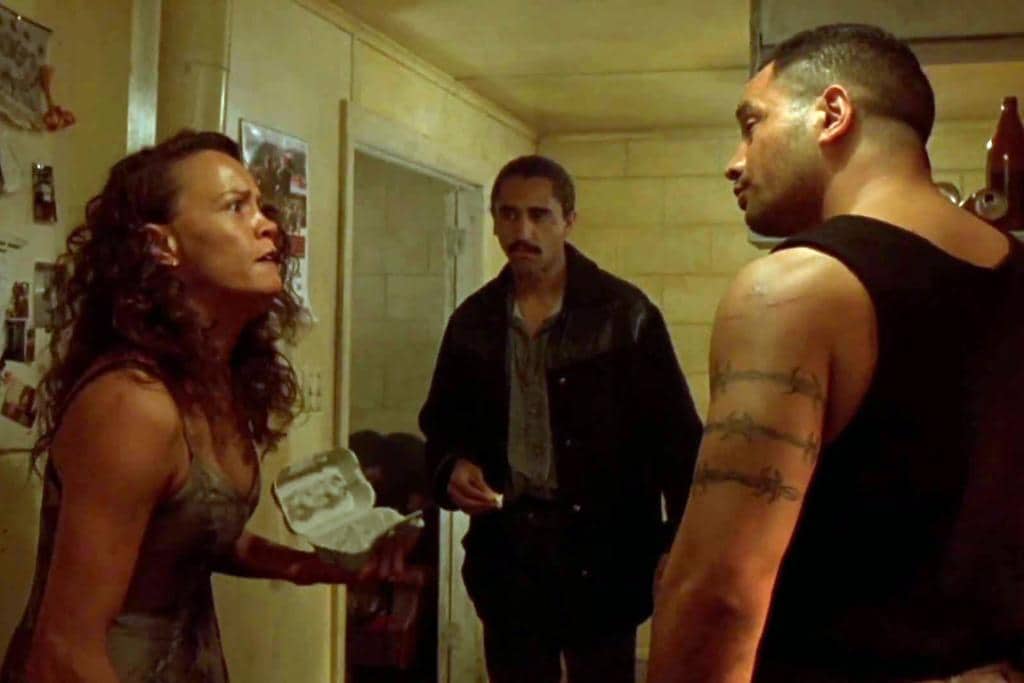
Beth Heke : Our people once were warriors. But unlike you, Jake, they were people with mana, pride; people with spirit."Once Were Warriors" (1994), directed by Lee Tamahori in his directorial debut, is a brutally unflinching look at the New Zealand Maori and their fictionalized struggle to adapt to Western culture. This controversial film boldly tackles issues such as rape, violence, alcohol abuse, and spousal abuse. It contrasts these harsh realities with the historical high esteem that the early Maori warriors were held in by the British.
How Tamahori managed to secure $1M to make such a contentious film on his first outing, I am at a loss. It's worth noting, his fellow Kiwi, Peter Jackson, was on his third film before he managed to secure that level of funding.
"Once Were Warriors" shattered all box office records in its native New Zealand. It grossed $114,000 in its opening from just four New Zealand cinemas. The film went on to make $6M. If my calculations are correct, it seems almost every Kiwi must have seen it twice.
The fact that this film could stir such intense and widespread interest is a testament to its raw power and the resonance of its message. "Once Were Warriors" is not just a film, it's a cultural touchstone, a mirror held up to society, forcing us to confront the harsh truths about the intersection of tradition, modernity, and the human condition.
- You are under the age of 18. The movie contains explicit scenes of violence and sexual abuse which may be distressing.
- You are sensitive to scenes of domestic violence and assault.
- You are affected by discussions or portrayals of alcohol abuse.
- You have a hard time dealing with themes of poverty and societal marginalization.
- You prefer light-hearted or comedy movies. This film deals with heavy and emotionally intense themes.
Warning: The following may contain spoilers:
What's the deal with "Once Were Warriors?"You know, this New Zealand drama is so intense, it makes The Sopranos look like a family-friendly sitcom!
American Beauty (1999)
Enthusiasts of "Once Were Warriors" will appreciate "American Beauty" as both films delve into the gritty realities of domestic life, exploring themes of love, pain, and redemption. Both movies provide a raw and unflinching portrayal of family dysfunction, violence, and struggle for identity within a societal framework. The narratives are underpinned by powerfully emotional performances, making them both distressing and engaging. The two films are dramatically intense, offering a profound exploration of the human condition, which is sure to resonate with those who appreciate thought-provoking cinema.
Harold and Maude (1971)"Once Were Warriors" and "Harold and Maude" delve deeply into the human condition, exploring themes of societal pressure, rebellion, and personal growth. They present characters wrestling with their identities and the world around them, offering a raw and unfiltered look at life's struggles. Both films use dark humor and intense emotional scenes to draw viewers in, while offering profound insights into their characters' lives. Thus, if you enjoyed the gritty realism and emotional depth of "Once Were Warriors," you would likely appreciate the similar themes and narrative style in Harold and Maude.
A Streetcar Named Desire (1951)Those who appreciate "Once Were Warriors" (1994) will likely also be captivated by "A Streetcar Named Desire" (1951) because both movies delve into the harsh realities of domestic violence, poverty, and substance abuse, portraying the struggle and resilience of their characters. Both films offer powerful performances, intense drama, and complex characterizations, all set against the backdrop of a gritty, socio-economically challenged environment. These elements create emotionally charged narratives that force viewers to confront uncomfortable truths, making both movies a captivating watch for those who appreciate profound and thought-provoking cinema.
Taxi Driver (1976)Connoisseurs of "Once Were Warriors" (1994) will undoubtedly appreciate "Taxi Driver" (1976) due to the similar themes of societal marginalization, personal struggle, and raw urban realism. Both movies feature complex, flawed characters wrestling with their inner demons and the harsh realities of their environments, offering viewers gritty, unvarnished depictions of human hardship. The powerful performances by Robert De Niro in "Taxi Driver" and Temuera Morrison in "Once Were Warriors" help to draw viewers into their characters' troubled worlds, making both films deeply impactful viewing experiences.
Strictly Ballroom (1992)Aficionados of "Once Were Warriors" (1994) would also appreciate "Strictly Ballroom" (1992) due to their shared emphasis on the exploration of cultural identity and personal growth against societal pressures. Both films tackle themes of family dynamics, societal expectations, and self-discovery, with "Strictly Ballroom" focusing on the world of competitive dance and "Once Were Warriors" on the struggles of a Maori family in New Zealand. Despite their different settings, both films offer an unflinching look at the individual's struggle for authenticity, making them appealing to viewers who appreciate emotionally resonant narratives.
Eat Drink Man Woman (1994)Those who love "Once Were Warriors" will also love "Eat Drink Man Woman" as both films, released in 1994, delve into the complex dynamics of family relationships and cultural traditions. While "Once Were Warriors" presents a raw and poignant look at a struggling Maori family in New Zealand, "Eat Drink Man Woman" provides a captivating exploration of a traditional Chinese family navigating the modern world. Both films share a common narrative of love, sacrifice, and the struggle for identity, wrapped in rich cultural contexts. The extraordinary performances and the directors' unique storytelling approaches in both movies will appeal to those who appreciate cinema that explores human emotions and social issues.
Rabbit-Proof Fence (2002)"Once Were Warriors" (1994) and "Rabbit-Proof Fence" (2002) offer deeply moving narratives that delve into the struggles of indigenous communities. "Once Were Warriors" provides a raw and poignant portrayal of a Maori family grappling with societal issues in urban New Zealand, while "Rabbit-Proof Fence" is a powerful depiction of the mistreatment of Aboriginal children in Australia, based on a true story. These films share themes of cultural identity, resilience in the face of adversity, and the strength of family bonds, which are bound to resonate with viewers who appreciate emotionally charged, character-driven stories that shed light on marginalized communities.
Monsoon Wedding (2001)Both "Once Were Warriors" and "Monsoon Wedding" are intense, character-driven dramas that delve into deep familial and cultural issues. They share a powerful narrative style, combining a raw portrayal of human relationships with a vivid exploration of cultural identity - Maori in "Once Were Warriors" and Indian in "Monsoon Wedding". They also touch on similar themes of domestic violence, social inequality, and the struggle to reconcile tradition with modernity. Therefore, fans of "Once Were Warriors" will appreciate the emotional depth, complex characters, and cultural insights offered by "Monsoon Wedding".
The Station Agent (2003)Buffs of "Once Were Warriors" (1994) will appreciate "The Station Agent" (2003) as both films delve deep into the human experience, exploring themes of loneliness, isolation, and the struggle to find connection and kinship in an often harsh and uncaring world. These films share a similar narrative complexity and character-driven storytelling that doesn't shy away from the darker aspects of life, yet also manages to find moments of warmth, humor, and redemption. The performances in both films are outstanding, with actors delivering nuanced, emotionally resonant portrayals that stay with you long after the credits roll.
The Dark Horse (2014):If you are a fan of "Once Were Warriors," then you might appreciate "The Dark Horse." This touching drama also hails from New Zealand and is based on the true story of Genesis Potini, a chess champion who overcomes struggles with mental illness. Cliff Curtis's performance is often cited as the standout, conveying a complex character with strength and sensitivity.
Whale Rider (2002):Another New Zealand gem you might enjoy is "Whale Rider." This coming-of-age film explores the Maori culture through the eyes of a young girl challenging tradition to become the chief of her tribe. It's beautifully filmed and imbued with a strong sense of place and culture, and it will tug at your heartstrings much like "Once Were Warriors."
Boy (2010):You could also look into "Boy," a coming-of-age tale set on the east coast of New Zealand in 1984. Directed by Taika Waititi (later known for "Jojo Rabbit" and "Thor: Ragnarok"), this film is a heartwarming, humorous, and at times heartbreaking examination of family and growing up.
Born to Dance (2015):I'd also recommend "Born to Dance," which tells the story of a Maori teenager's quest to become a professional hip hop dancer. It's a dance film with an infectiously energetic atmosphere that still retains the dramatic weight and culturally specific themes of other New Zealand cinema.
Sleeping Dogs (1977):Lastly, you might enjoy "Sleeping Dogs," an action-packed film set amidst the political turmoil of 1970s New Zealand. It's another powerful look at the struggles facing that country's citizens, with plenty of action and intensity to keep you on the edge of your seat.
Like this? Then click here to see more drama movies