Pub.lished Movie Reviews
The Ox-Bow Incident (1942)
"It's easy to be put off by the studio sets and lighting and by the 40s approach to a "serious" subject, but the director, William Wellman, has made the characters so vivid that after many years people may still recall Frank Conroy" - Pauline Kael
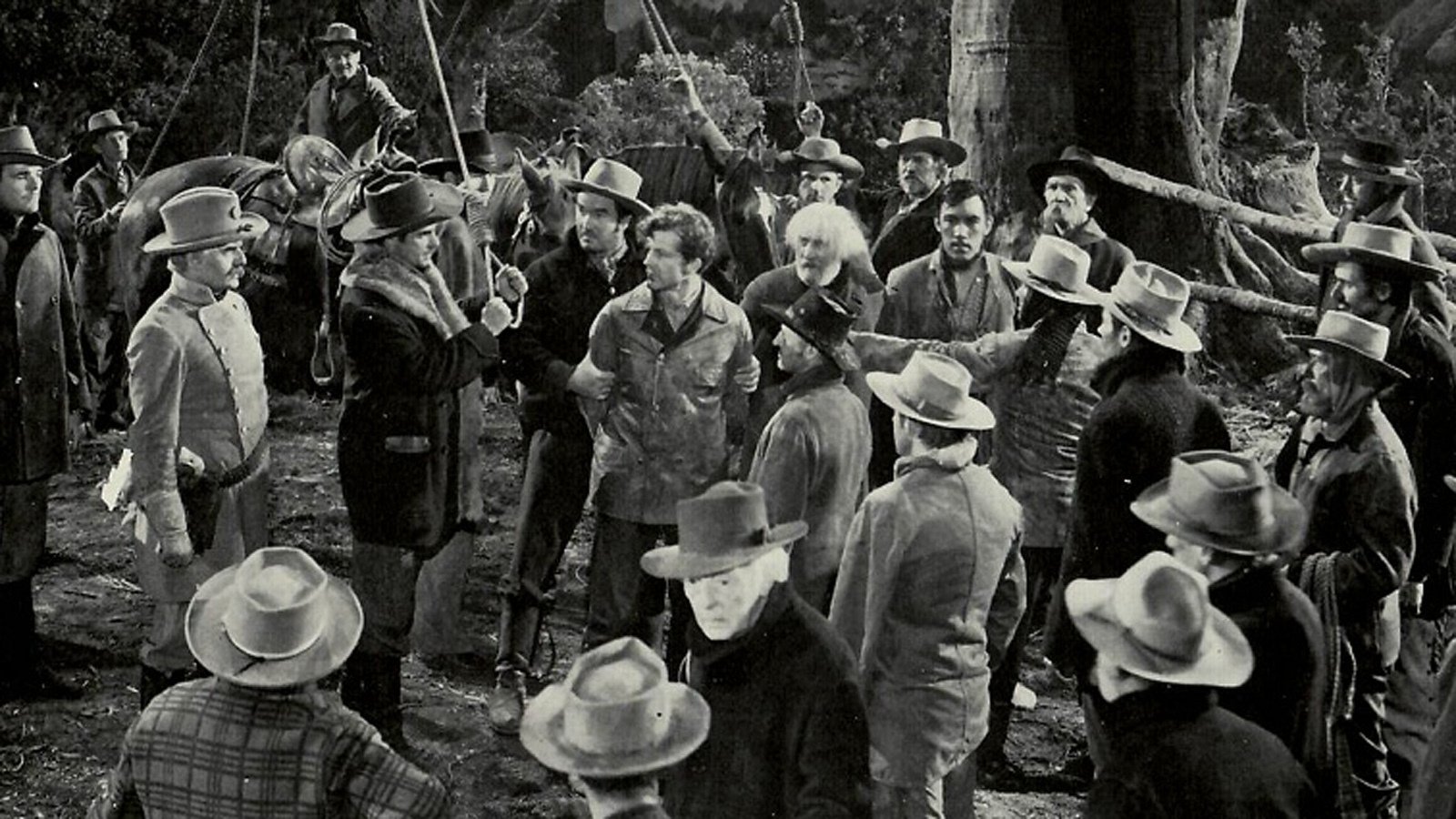
"The Ox-Bow Incident" (1942) is undeniably a great film. To this day, it stands up well and remains watchable even for the modern audiences of today. What sets this film apart is that it is unusually heavy and dark for a western of that era.
Reviewing this film without giving anything away is challenging, but it's safe to say that it is worthy of comparison to the masterpiece "12 Angry Men". "The Ox-Bow Incident" explores similar themes of justice, mob mentality, and the individual's struggle to stand against the crowd.
The story unfolds in a Western town where two cowboys, played by the brilliant Henry Fonda and Dana Andrews, arrive to chilling news. A local rancher has been brutally murdered, and his cattle have been stolen. This ignites a thirst for justice among the townspeople, who are joined by cowboys from nearby ranches, including characters portrayed by Mary Beth Hughes, Anthony Quinn, William Eythe, Harry Morgan, and Jane Darwell. Together, they form a posse to hunt down the culprits.
The plot thickens when the posse captures three men found in possession of the stolen cattle. The community becomes fiercely divided over what to do next. The dilemma of whether or not to lynch these men on the spot adds intense depth and conflict to the narrative.
All things considered, "The Ox-Bow Incident" is a gripping tale of justice and morality that will keep you engaged until the very end. It's a film that transcends the typical expectations of its genre, making it a must-watch for any film enthusiast.
- You are not comfortable with themes of mob violence and justice.
- You prefer films with a more contemporary setting or style.
- You don't like movies that evoke strong emotions and make you think.
- You are under the age of 13, as the movie contains scenes and themes that might not be suitable for younger audiences.
Warning: The following may contain spoilers:
What's the deal with "The Ox-Bow Incident?"I mean, it's a western movie with no saloon brawls, no horse chases, and, get this, no cowboys riding off into the sunset! It's like a broken pencil! Pointless!
And these guys, they're so eager to exact justice, they forget to check if they've got the right people! It's like going to the grocery store, filling your cart, and realizing at the checkout line you've got all the wrong items. Only in this case, the wrong items are innocent men and the checkout line is a lynching!
The Grapes of Wrath (1940)
Both "The Ox-Bow Incident" (1942) and "The Grapes of Wrath" (1940) are classic films that delve into the harsh realities of human life during difficult times in American history. They share similar themes of social injustice, mob mentality, and the struggle for survival. The poignant storytelling, compelling character development, and powerful performances in both films provide a gripping and emotional viewing experience. Furthermore, the films' evocative depictions of the American landscape, combined with their exploration of moral and ethical dilemmas, make them appealing to those who appreciate thought-provoking cinema.
Citizen Kane (1941)Buffs of "The Ox-Bow Incident" will also love "Citizen Kane" as both films delve into deep psychological and moral complexities of their characters while pushing cinematic boundaries. "Citizen Kane," similar to Ox-Bow, uses innovative narrative structure and profound themes such as power, ambition, and human frailty to convey its story. Its groundbreaking cinematography, just like Ox-Bow's stark black-and-white visual style, set new standards in the film industry. Moreover, both films, acclaimed for their rich storytelling and strong performances, critically examine societal norms, making them timeless classics in American cinema.
The Treasure of the Sierra Madre (1948)Both "The Ox-Bow Incident" and "The Treasure of the Sierra Madre" are classic films that delve deep into human nature, morality, and the complexities of justice. Both movies are set in the Wild West and involve men who are forced to confront their own greed, violence, and prejudices. "The Treasure of the Sierra Madre," like "The Ox-Bow Incident," features a strong narrative, brilliant performances, especially from Humphrey Bogart and Walter Huston, and a thought-provoking exploration of the human condition. The similar themes, settings, and moral inquiries make these two films irresistible to lovers of profound and thought-provoking cinema.
Stalag 17 (1953)Those who appreciate "The Ox-Bow Incident" (1942) will likely enjoy "Stalag 17" (1953) as both films delve into profound themes of justice, human nature, and the struggle of individuals against mob mentality. Both movies, while encapsulated in different scenarios—one in a western frontier justice setting and the other in a World War II prisoner-of-war camp— deeply explore the complexity of human character, the tension between group dynamics and individual integrity, and the moral implications of their respective situations. Additionally, the strong performances, engrossing storytelling, and the exploration of serious themes within a tight-knit group of characters make both films compelling watches for those who enjoy thought-provoking cinema.
On the Waterfront (1954)Fanciers of "The Ox-Bow Incident" will appreciate "On the Waterfront" for its similar exploration of morality, justice, and the human condition. Both films delve into the dark side of society, challenging the viewer to question their own values and beliefs. "On the Waterfront," like "The Ox-Bow Incident," uses a gripping narrative and compelling performances to tackle profound social issues, making it a must-watch for those who appreciate thought-provoking cinema with depth and substance.
The Bridge on the River Kwai (1957)"The Ox-Bow Incident" and "The Bridge on the River Kwai" are classic films that delve into the complexities of human nature, morality, and the effects of war. They both center on a group of men facing challenging circumstances that test their values, camaraderie and resilience. Both films, while set in different time periods and contexts, effectively use the backdrop of conflict to explore deeper philosophical and ethical questions, making them compelling watches for those who appreciate thoughtful, character-driven narratives. These films also share acclaimed performances, remarkable cinematography, and are celebrated for their compelling storytelling.
North by Northwest (1959)"The Ox-Bow Incident" (1942) and "North by Northwest" (1959) are timeless classics that share an exploration of the human condition under pressure. These films are known for their engaging storytelling, well-drawn characters, and moral complexities. "The Ox-Bow Incident" delves into mob mentality and justice, while "North by Northwest" is a thrilling chase narrative, yet both films explore the themes of mistaken identity and the struggle for personal salvation. If you appreciate the depth and suspense of "The Ox-Bow Incident," you will likely enjoy the similar tone and tension in "North by Northwest," along with its iconic direction by Alfred Hitchcock and stellar performance by Cary Grant.
Psycho (1960)Both "The Ox-Bow Incident" (1942) and "Psycho" (1960) share a profound exploration of the human mind and the darker aspects of society. They are both narratives that challenge the audience's perception of morality and justice, employing intense psychological drama that keeps viewers on their toes. Their suspenseful and unexpected plot twists, coupled with superb character development, make these movies captivating for lovers of psychological thrillers. Intriguingly, both films also present a critical analysis of the human propensity for violence and prejudice, making them not just entertaining, but also thought-provoking.
The Manchurian Candidate (1962)Those who appreciate "The Ox-Bow Incident" (1942) for its dramatic tension, moral complexities, and exploration of societal pressures will also love "The Manchurian Candidate" (1962). Both movies delve into the psychology of their characters and the influence of their environment, creating an intense atmosphere that captivates the viewer. Furthermore, both films offer a commentary on societal issues, with "The Ox-Bow Incident" tackling mob justice and false accusations, and "The Manchurian Candidate" exploring political manipulation and brainwashing. The nuanced performances, compelling narratives, and thought-provoking themes in both movies will appeal to fans of classic cinema with depth and substance.
High Noon (1952):Since you appreciate the tensions and moral complexities in "The Ox-Bow Incident," you might also enjoy "High Noon". Gary Cooper's iconic performance as a town marshal abandoned by his town as he faces a gang of killers alone is nerve-jangling. Directed by Fred Zinnemann, this film is the classic Western story of a solo hero who fights against the odds.
Bad Day at Black Rock (1955):"Bad Day at Black Rock" is a hybrid of Western and film noir with elements resembling "The Ox-Bow Incident". Directed by John Sturges, the story unfolds as a one-armed stranger comes to a tiny town possessing a dreadful secret. Its suspenseful plot and starkly beautiful cinematography make it a must-watch.
Twelve Angry Men (1957):Presumably, if you appreciate the complex themes of mob mentality and justice found in "The Ox-Bow Incident," you'll like "Twelve Angry Men". It's a riveting character study, as twelve jurors deliberate on the fate of a murder suspect. Directed by Sidney Lumet, the film offers a brilliant exploration of human psychology and the democratic process.
To Kill a Mockingbird (1962):While "To Kill a Mockingbird" is a drama rather than a Western, it shares thematic elements with "The Ox-Bow Incident," exploring morality, justice, and innocence. Directed by Robert Mulligan, the film adaption of Harper Lee's Pulitzer Prize-winning novel features Gregory Peck's unforgettable performance as Atticus Finch.
My Darling Clementine (1946):Garnering remarkable cinematic praise, "My Darling Clementine," like "The Ox-Bow Incident," is a classic Western exploration of law and order. The film is directed by John Ford and revolves around the life of Wyatt Earp, the tough, incorruptible lawman who took part in the gunfight at the OK Corral.
Like this? Then click here to see more western movies