Pub.lished Movie Reviews
The Adventures of Priscilla, Queen of the Desert (1994)
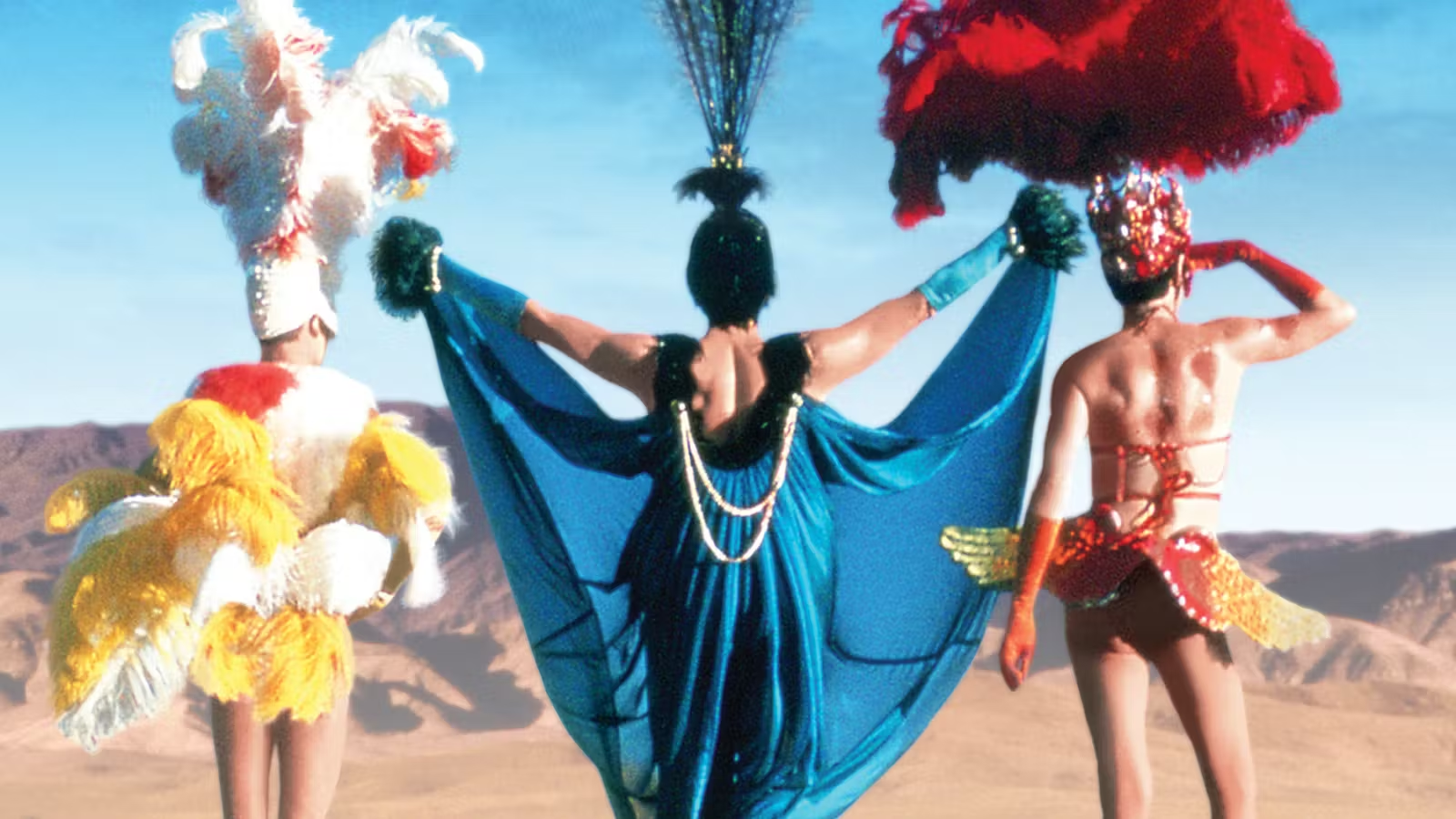
Two drag performers and a transgender woman travel across the desert to perform their unique style of cabaret.
"The Adventures of Priscilla, Queen of the Desert" is an absolutely fabulous movie.
This movie wasn't made specifically for the LGBT community. I doubt it conveys any particular message to my LGBT friends.
It was made for the heteronormative community to celebrate the LGBT community.
And the primary message is, the LGBT community is absolutely fabulous.
- You are uncomfortable with LGBTQ+ themes and representation.
- You are under the age of 15, due to some mature content.
- You do not enjoy comedic drama films.
- You dislike Australian cinema or cultural elements.
- You prefer action, horror, or thriller genres.
American Beauty (1999)
Both "The Adventures of Priscilla, Queen of the Desert" and "American Beauty" are films that challenge societal norms and push boundaries in their exploration of identity and self-discovery. They both feature characters that struggle with their identities, break free from their conventional lives and find their own paths to happiness, even if it means facing societal rejection. These films offer a poignant, humorous, and sometimes painful look at the complexities of the human experience, making them appealing to those who appreciate character-driven narratives with strong themes of self-acceptance and authenticity.
Harold and Maude (1971)"The Adventures of Priscilla, Queen of the Desert" and "Harold and Maude" are cult classics that celebrate individuality, nonconformity, and the exploration of unconventional relationships. They share a similar quirky, offbeat humor and a deep, poignant exploration of life's eccentricities and absurdities. These films also examine themes of self-discovery, acceptance, and the importance of living authentically, making them a perfect match for viewers who appreciate poignant narratives with a touch of whimsy.
Willy Wonka & the Chocolate Factory (1971)"The Adventures of Priscilla, Queen of the Desert" and "Willy Wonka & the Chocolate Factory" are movies that celebrate individuality, imagination, and the magic of transformation. Just as Priscilla takes viewers on a dazzling, colorful journey through the Australian Outback with its trio of drag queens, Willy Wonka uses its fantastical chocolate factory to showcase the eccentricity and whimsy of its main character, Willy Wonka. Both films embrace the idea of being different, offering memorable characters, vibrant visuals, and narratives that blend comedy, drama, and life lessons, making them both irresistible to those who appreciate unique, character-driven stories.
The Rocky Horror Picture Show (1975)Both "The Adventures of Priscilla, Queen of the Desert" and "The Rocky Horror Picture Show" are flamboyant, colorful, and groundbreaking films that celebrate non-traditional gender identities, sexuality, and eccentric fashion. They playfully push the boundaries of societal norms and explore themes of transformation and self-discovery, all wrapped in a mixture of humor, drama, and memorable musical numbers. If you love the warmth, wit, and irreverence of Priscilla, you'll appreciate the same qualities in the cult classic, Rocky Horror.
Thelma & Louise (1991)"The Adventures of Priscilla, Queen of the Desert" and "Thelma & Louise" are iconic road trip films that focus on personal freedom, transformation, and self-discovery. They feature strong, layered characters who challenge societal norms and expectations, and they use humor and drama to explore deeper themes of friendship, identity, and empowerment. The stunning cinematography and memorable soundtracks in both films further enhance their compelling narratives. So, if you appreciate the blend of wit, emotion, and social commentary in Priscilla, you're likely to enjoy the similar elements in Thelma & Louise.
Strictly Ballroom (1992)"The Adventures of Priscilla, Queen of the Desert" and "Strictly Ballroom" are iconic Australian films that celebrate nonconformity and challenge societal norms. They share a similar sense of humor and vibrancy, featuring colorful characters and a quirky, irreverent style. The narratives, although different in context, are both about self-expression, acceptance, and the courage to be oneself, no matter how outrageous or unconventional. Moreover, their flamboyant visual aesthetics, combined with a strong emphasis on performance and spectacle, make them both entertaining and emotionally engaging.
Best in Show (2000)"The Adventures of Priscilla, Queen of the Desert" and "Best in Show" are both comedies that offer a blend of humor, eccentric characters, and insightful commentary on their respective subcultures. Each film showcases a unique journey - drag queen performances in the Australian desert and competitive dog shows in the US, respectively - and uses a mockumentary style to highlight the absurdity, passion, and sincerity within these unconventional worlds. If you appreciate the colorful personalities, quirky humor, and heartwarming moments in Priscilla, you'll find a similar joy in the lovable oddities and comedic situations of Best in Show.
Chocolat (2000)"The Adventures of Priscilla, Queen of the Desert" and "Chocolat" are heartwarming films that celebrate individuality, freedom, and the power of acceptance. They share themes of breaking societal norms, challenging stereotypes, and the transformative power of kindness and friendship. While Priscilla explores these themes through the lens of drag queens in the Australian Outback, "Chocolat" does so through a woman opening a chocolate shop in a conservative French village. Connoisseurs of Priscilla will appreciate the shared spirit of nonconformity, rich character development, and the feel-good factor of Chocolat.
Billy Elliot (2000)"The Adventures of Priscilla, Queen of the Desert" and "Billy Elliot" are beautifully crafted films that challenge traditional gender norms and societal expectations, while also tackling themes of self-discovery and acceptance. They both feature compelling, well-developed characters who dare to defy the status quo in order to pursue their passions, whether it's performing in drag shows across the Australian Outback, or aspiring to become a professional ballet dancer in a blue-collar English town. Moreover, both films are a blend of drama and comedy, filled with heartwarming, inspiring, and humorous moments that will appeal to those who appreciate stories about the triumph of individuality and self-expression.
Finding Neverland (2004)"The Adventures of Priscilla, Queen of the Desert" and "Finding Neverland" are emotionally resonant films that revolve around the themes of imagination, self-discovery, and breaking societal norms. Both films celebrate the power of creativity, the importance of self-expression, and the ability to overcome personal and societal obstacles. While they are different in terms of plot and genre, their shared exploration of these themes makes them appealing to viewers who appreciate character-driven stories about personal growth and transformation.
To Wong Foo, Thanks for Everything! Julie Newmar (1995):Starring notable actors Wesley Snipes, Patrick Swayze, and John Leguizamo, this comedy-drama tells the story of three drag queens across a road trip in the US. Much like "The Adventures of Priscilla, Queen of the Desert," the film explores themes of friendship, acceptance, and self-discovery through a comedic and heartfelt lens.
La Cage aux Folles (1978):A French-Italian comedy film, "La Cage aux Folles" explores the world of a gay couple who run a drag nightclub—a theme reminiscent of the cross-dressing humor and flamboyant performances in "The Adventures of Priscilla, Queen of the Desert." The film was so popular it inspired two sequels and an American version known as "The Birdcage".
Hedwig and the Angry Inch (2001):This rock musical tells the story of Hedwig, a transgender woman and singer. With its distinctive musical performances and unique narrative structure, it could appeal to fans of "The Adventures of Priscilla, Queen of the Desert" who enjoyed its exploration of LGBTQ+ themes and esoteric style.
The Birdcage (1996):Directed by Mike Nichols and featuring a stellar cast that includes Robin Williams, this comedy-drama is an American adaptation of "La Cage aux Folles." It focuses on a gay cabaret owner and his drag queen companion who need to put on a straight façade to meet their son's prospective in-laws. Its flamboyant characters and hilarity are in line with the same charming eccentricity found in "The Adventures of Priscilla, Queen of the Desert."
Paris Is Burning (1990):For those interested in a more realistic view of drag culture, "Paris Is Burning" is a documentary spotlighting the drag scene in 1980s New York City. While it's more serious than "The Adventures of Priscilla, Queen of the Desert," it remains highly impactful, offering deep insights into the lives and struggles of the performers.
Like this? Then click here to see more comedy movies